Transparency, honesty, and trust

Documenta 15 in crisis – lessons for communication in critical situations.

The final weekend of Documenta fifteen is upon us

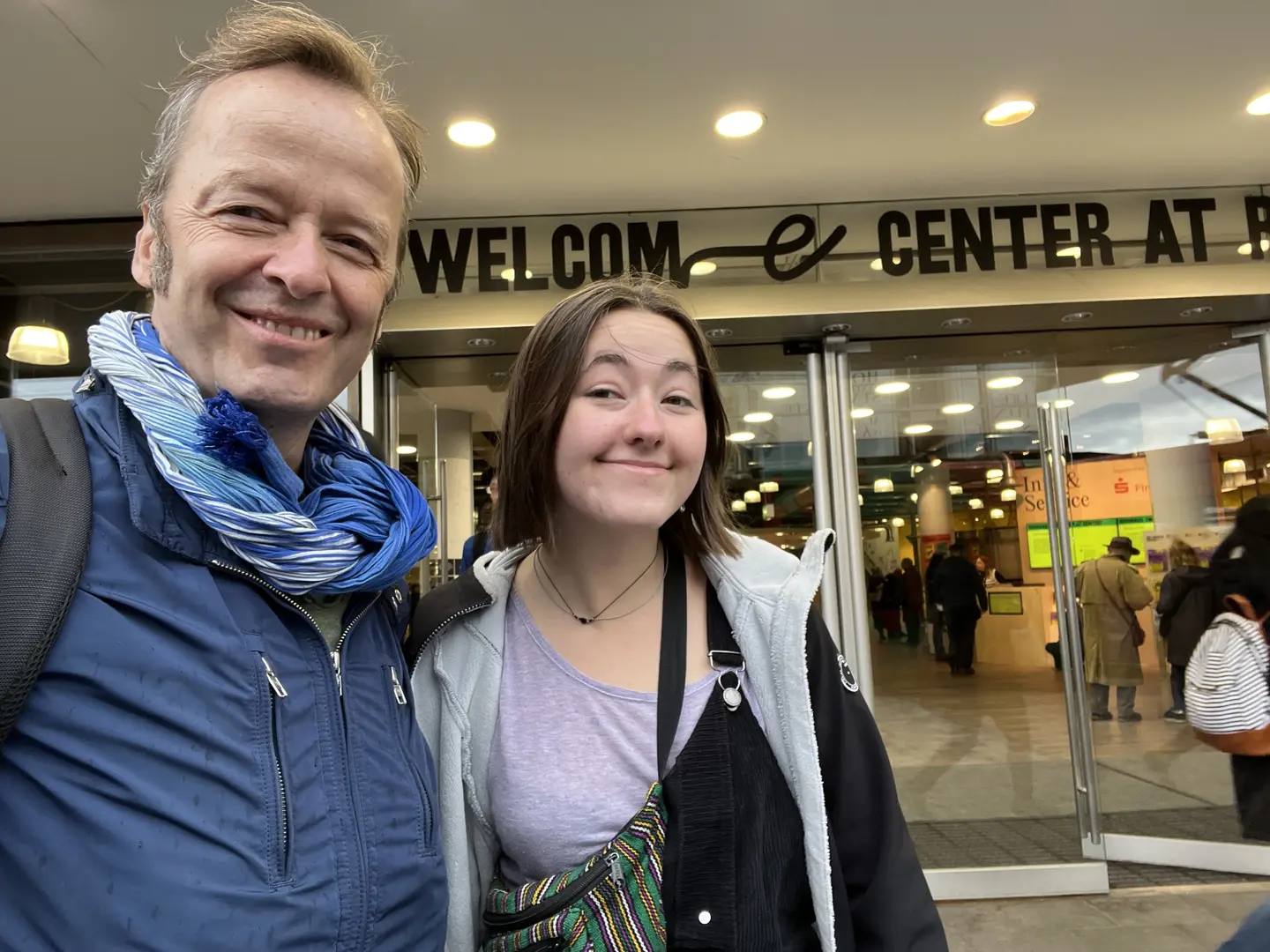
On September 25, this art event, which is unique in Germany and Europe, will come to an end, and it will be five years before it starts again—if it starts at all! Rarely has a Documenta been as controversial as this one. The organization was left to a team of curators, the Ruangrupa collective, a group of artists from Indonesia. They wanted to introduce special forms of artistic work, such as the principle of “Lumbung,” more on that later. Unfortunately, however, they apparently made some serious mistakes, whether intentional or accidental—and the consequences have been the subject of heated debate in the media and in public for weeks. My eldest daughter and I, Stephan Probst, wanted to see for ourselves. Here are our thoughts based on our visit and our reading of many sources.

The conflict

What happened? The curatorial collective exhibited images that clearly and unambiguously conveyed anti-Semitic connotations and postulated anti-Semitic statements. According to their initial statement, the management of Documenta and its assistants did not notice this in advance. However, they were also slow to take action to remove the images in question. And they had to be pointed out again by third parties – they had failed to check carefully afterwards. The curatorial collective reacted rather indignantly, feeling misunderstood and accusing them of “racism.” This was followed by numerous articles in the media with analyses and comments, explanations and counter-explanations, calls for those responsible to resign, and resignations, culminating in the immediate cancellation of the event and all exhibitions—it could hardly have been worse.

First impressions: Kick-start the day

The curators offer morning events to get visitors in the mood: “Short, 15-minute introductions to documenta fifteen with art educators sobat-sobat, members of ruangrupa, the artistic team, actors from the Kassel ecosystem, and employees of the partners, among others.” Representatives and creators of controversial works, such as Taring Padi, will meet on the podium.

They stated clearly that their political goals were paramount and that art and what they were showing here were merely instruments to achieve them. The audience on site is very open-minded, there are no contradictions or discussions, unlike outside in the media's counterworld. Some speak little English or are difficult to understand. It would be helpful to record these events in which they express themselves and explain their views. Then it would be possible to follow what was said and understand what is important if one wants to engage in dialogue and mutual understanding. And it would be so simple and is long since taken for granted elsewhere. But as it is, this performance remains an internal event within the community, which confirms the curators in their actions, opposes them in no way, and questions them not.

On friendship and “lumbung”

The guiding principle behind the conception and design of Documenta is “lumbung”—the barn, the harvest house where people come together, exchange ideas, and learn from one another—which is explained in detail in the Documenta “handbook,” declared “indispensable.” The curators have chosen a pretty Indonesian word for each of their principles. Above all, they postulate that friendship is more important to them than art, and this is constantly emphasized in the guided tours. However, this stands in stark contrast to the conflicts. Wouldn't this lead to an even greater desire for mutual understanding and corresponding actions? We missed this very much—both in the run-up to the event and on site, especially on the website, in their own media, and channels.

Join in

Holes and wounds

References to pictures taken down due to “false accusations.” And lots of holes in the walls, rooms, and buildings. It looks empty, this Documenta 15.

Repetition and political communication

And what is there often repeats itself, with certain design principles cropping up again and again: collections of notes, copy art on the walls, display graphics with system sketches, and more. Many of the partial exhibitions and works are clearly politically motivated, for example on “la lutte des femmes en Algérie” – an exciting topic, but the connection to art is vague. Or parts of exhibitions about brands and motifs that are interpreted very differently today than when they were created, such as the Sarotti figure. It is undoubtedly important to point this out—but the artistic content is rather low and limited. Such exhibits—films, display boards, leaflets, note walls—take up a lot of space.

Limited image

The selection also seems very limited. There are no artists from Israel, for example. Only a few voices echo in this echo chamber.

What can we learn from this?

  • HONESTY is the first and most important prerequisite for good communication, especially in a crisis like this. We assume that everyone means what they say. We assume that the curatorial collective is serious about the principle of “Lumbung,” the friendly barn where everyone comes together to create something, exchange ideas, and learn from each other. We expect the general public to be outraged, disturbed, horrified, and hurt by the clumsy and offensive use of false symbols, images, and statements.
  • UNDERSTANDING: An important goal should be to show the other person that you are listening proactively and making an honest effort to empathize and understand what they are saying, both cognitively and emotionally. The curatorial collective was given a great deal of time and space for this in the run-up to Documenta. The same applies during Documenta, but have these opportunities for exchange been well utilized? It would appear not.
  • TRANSPARENCY: It must remain clear what is being said, how it is being communicated, with whom, and when. This is particularly important when languages, signs, and symbols are difficult for the other person to understand. Withdrawing into one's own cave, shell, or community may be understandable, but it harms the exchange process. Unfortunately, I think the curators have to accept this criticism. They talk more with and among themselves, but less with others; they withdraw and hide.
  • RESPONSIBILITY: When using certain signs and symbols, the sender is responsible for how they are understood, even in a foreign context, especially in such an important function and role as a curator. I myself could not reject this responsibility if, as a German, I were to design an exhibition in Indonesia. This is even more important when it comes to “friendship.” The curators here have failed to do this. And the German officials, the management, and others who should have led and guided here have failed even more.
  • INSIGHT and BETTER BEHAVIOR: Everyone can make mistakes, especially when communicating, where misunderstandings are always to be expected. But when a process escalates like this, clear signs of insight and a change in behavior based on this insight are extremely important so that the other person recognizes that something has changed. Above all, it is important to approach the other party, establish mutual understanding, i.e., do what the “lumbung” principle is supposed to express. The fact that this does not happen exacerbates the process. There is probably a lack of mediators who could perform the task of bringing people together in this situation.

The lasting impression

Even though visiting Kassel every five years for this occasion can be thoroughly enjoyable and it is very exciting to engage with this conflict, what remains is the impression of a severely damaged Documenta, which until now had been a beacon of light. It will take more than words to heal this wound. The actions taken during the event were not enough.

The impression that remains is rather that the curators' intention to understand their hosts was not sufficiently developed. That their understanding of the world of signs and symbols in which they were operating with their project was not very extensive, and that their artistic and technical abilities were insufficient: perhaps they simply cannot do any better? Or was their overall intention different from the message of “friendship” proclaimed in their principles, writings, and other statements: namely, political influence and agitation under the guise of art? This impression, with the introduction described above, suggests that a time-honored event was simply hijacked by activists.

All in all, it's just a great shame, a lot of missed opportunities.

"Grateful to be in the last Documenta"?

That would be disastrous. Better to say: Do better next time.

Links

More blog posts

You've won the European Heritage Seal! What a wonderful honor!

COMIC artists sharpen perspectives, seek new paths, and open up worlds. We are preparing a utopian-dystopian exhibition of visionary comic worlds at…

Digital battles are raging, including for children's minds. Social media companies have stepped up their game – but are children even prepared and…

Stephan Probst had the honor and opportunity to draw with the great comic artist Xu Jingru from Shenzhen at the International Comics Seminar.