Has communication changed in recent months, particularly as a result of the pandemic, and if so, how? This is the topic of the fireside chat on the transformation of communication in the #d2mtalk marathon on July 27 at 9:20 p.m., in which Stephan Probst will be a guest of Björn Negelmann, along with Mark Pohlmann and Jan Warp. Here are a few thoughts to prepare you.
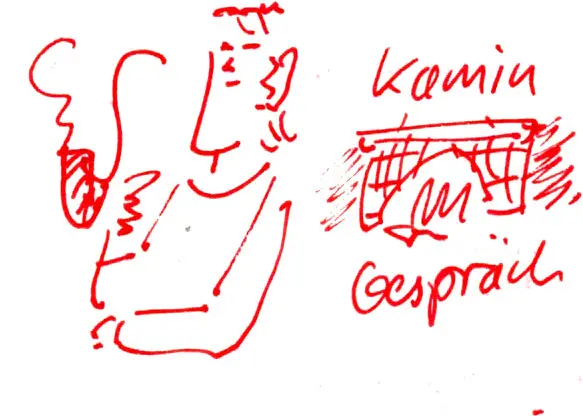
How communication is changing – is a major transformation on the horizon?
From paradise to post-pandemic communication – how to communicate in a catastrophic world
Everything has changed under the conditions of the pandemic: life, our work, the way we interact with each other, how we receive, perceive, and process information, and how we communicate with others. So communication cannot have remained unchanged. The question is rather: how much and what has changed in communication, especially with the media, and how will it develop in the future? Will everything go back to the way it was “before”? Or was the pandemic more of an “accelerant” for long-overdue developments? Or has it given rise to entirely new impulses and changes? A little bit of everything.
Everything is digital, and digital is everything
When we all had to retreat: home office, home school, home whatever, we didn't stop communicating, we just did it differently, almost exclusively digitally.
- With our closest relatives: at home, in our little cave.
- With our colleagues, when working from home was possible: mostly via digital media, with new tools, processes, and forms of organization, the same for home school.
- With the rest of the world: also via digital channels, a lot via social media; even those who were completely cut off, and there were quite a few.
- And all those who were still able to work on site in their existing structures: they also kept in touch with those in their caves digitally.
Getting information, chatting, shopping, ordering, organizing, and much more. What we needed was brought to us by those who were quick to react. And many realized: this works. At the same time, it was reasonably warm and safe in our caves, we were protected, disasters raged outside, inside we were together. Our windows to the world: the small and large monitors. And everyone searched and clicked on whatever they found.
The new recipients: “digital cavemen”
So, how are things in this world of disaster?
- The “digital cavemen”: We are slowly crawling out of our caves and back into the world, but it has changed. Nothing is certain, and as soon as we let go of something, we are caught again. The virus is far from being tamed, and nothing is the way it used to be, if it ever will be again. Our lives are marked by great uncertainty. The same goes for our work: many are now feeling the knock-on effects. Many companies have struggled with the situation, some have run into considerable difficulties, and a few have managed to weather the storm. For everyone—workers, employees, employers—the last year has not been the easiest. The consequences often take time to become apparent. For many, nothing is the same as it used to be.
On top of that, there are new disasters: climate change, floods, heat waves, storms, and many other things that seem difficult to predict and control, both based on subjective perceptions and on data and facts as real information. Wild forces are raging, and where can we find protection from them? In small communities, manageable structures, and clear messages. This is where there is room for strong leaders and institutions; for populists, this is paradise—the more confusing and uncertain the world, the weaker the recipients subjectively, the more popular strong “broadcasters” become.

Other “digital types”
- The “digital wolves”: they are comfortable with the new conditions, they are early adopters, this is their territory, they rule it, and everyone else is prey to be devoured. Their archetype: Jeff Bezos, emperor, pope, and god-king of e-commerce, who quickly beams himself up for a 10-minute trip into space while the masses below struggle with the devastated world. Eat or be eaten – it's as clear as day.
- The “digital hibernators”: They simply held their breath, drifted off, switched off. Out of fear and desperation that the catastrophe will soon be over. In lethargy and inertia, because they couldn't or didn't want to change anything anyway. And now they're waiting for spring to come and everything to bloom as beautifully as it used to. Oh, how wonderful that would be! But it won't happen. Catastrophes will come and go, but then new ones will come. The world is chaos, we have to shape it.
- The “digital morons”: They haven't understood a thing. They use ancient phones, reject all “new” media (which are now really ancient), stuck in the 80s and 90s when there were even more great hits. There's no helping them.
... and a few more.

The content: messages, images, and meanings are carefully checked.
The “cave dwellers” are in the majority: they have adapted to the situation and learned to deal with the media. One of their main motivations is fear, or to put it another way: they have become cautious. Because they have something to lose. They can be reached via all kinds of digital media. But the content is carefully checked.
- Do I see and understand it? The language, the images, the meanings behind them? If not, I don't even notice it, because I see far too much.
- Is it relevant? Does it fit into my set, do I even need it, do I have to deal with it? If not, it gets sorted out right away.
- Is it true? Is it right or wrong? Can I believe it?
- Is it plausible? Does it make sense, can I understand it?
- What's in it for me? What benefits and rewards can I expect, and is it worth it to me?
And they demand PROOF for everything.

The media: channels are becoming more diffuse and diverse, touchpoints even more fragmented
The more small groups, tribes, and packs form, the more small “digital campfires” they light around which they gather. The task for those sending messages is to find them in the digital twilight, recognize them, and be accepted and invited in. To do this, they must search the channels, look for traces, be able to read and recognize them, and then stalk them. Once they have done that, it is important to maintain contact at all touchpoints and in all ways.
The following are important here:
- Create continuity: lots of repetition, finding the right rhythms to demonstrate security and reliability
- Engage in dialogue: seek exchange, understand and speak the language, build bonds, convey sympathy and other values
- Follow rules: create structures and processes, build meaning
- Understand interactions: who with whom, how, by what means
- Exchange values: like in a traditional barter system, both material and immaterial
- Sharpen your focus. In the days of “real” cavemen, it was those with good eyesight who could see far and discover new opportunities, but also dangers. Now, it is those with the right tools, the best questions, and the most accurate analyses who are ahead of the game.
The new senders: what has changed here?
The senders have also changed. In chaotic situations and the aftermath, everyone has to adapt, but some do so more than others, and some not at all.
- The “liars”: They promise the moon, beat the big drum, but whether it will actually rain – who knows? They come, promise a lot, and disappear quickly. And then they've pocketed as much as they can. Their big moment came in the early days.
- The “good guys”: genuine, real, truthful. They convince with evidence and offer benefits that are actually useful. Now could be their time, because people are wary, critical, and asking questions. However, there is still a great deal of uncertainty about many things, often due to a lack of knowledge. Convincing people is hard work, but it's worth it.
- The “procrastinators”: They continue as before. Everything will ‘somehow’ work out until “someday” nothing works anymore.
- The “shipwrecked”: They have already failed. They will soon be joined by the procrastinators, unless they wake up before then.
- The “do-nothingers”: They are simply sitting it out and enjoying the summer. They have enough reserves, loans, or other resources, so let the others make the effort. At some point, they will also get started, probably in the same way as before.

The pressure on communication is increasing. The role of communicators is changing.
The task of communicators has not become any easier; their role has become more complex. In the “pre-pandemic” days, it was still possible to believe that all you had to do was formulate your messages, choose your media mix, add a few nice pictures, some snappy text, and quick programming, but that is definitely no longer the case today, at least if you are one of those who want to shape things, for better or for worse. The best and most quickly measurable results are: Effectiveness and efficiency are becoming even more important categories of success, along with agility in the sense of high flexibility and speed. They were important before, but now they are essential for survival. As a communicator, you have significantly more responsibility for what happens in the company than before. Shaping internal and external relationships are the most important tasks; the communicator is a chief social officer who manages social relationships and the exchange of values and meanings with others.
- We provide meaning: WHY?
- We set goals: WHERE?
- We show ways: HOW?
- And that goes far beyond the mere WHAT and WHICH CHANNEL: it involves designing messages and disseminating them via media.
So things remain exciting and never get boring.

Stephan Probst
More blog posts

Lights on, Stream is Live: Why Livestreaming is the Ultimate Turbo for Your Brand
Do you have a powerful product, a vital message, or an event that needs to move people? Then let the world experience it in real time. Whether you are…
Real Drive for the Future: Why Sustainability is Embedded Deep in Our Code
Beyond green hosting – how DRIVE designs digital solutions that are ecologically, socially, and transparently sustainable.
Spotting Deepfakes: The European Commission Launches New AI Labels
Artificial intelligence is transforming how we create content. But how can customers tell if an image, text, or video is authentic? The European…
Many Ways of Imagining the Future – How Comics Make Our Questions About the World Visible
Comics tell stories in a unique way. They can make complex themes visible, reach different audiences, and open up new perspectives on our present and…