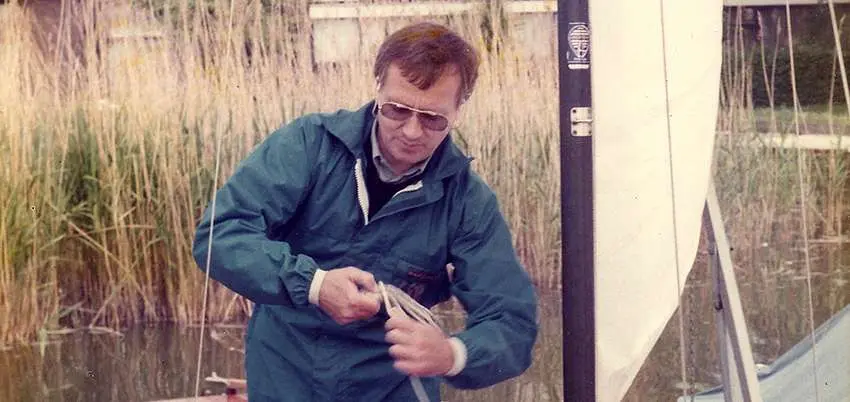
Calm waters can be deceiving. Now is the time to prepare for the next storm, because it will surely come. Sailing is a good school for life and business—my dear father told me so. Here are a few rules to help you stay on course.
1. Is the ship seaworthy?
Is your ship seaworthy? Are the mast, sails, rudder, and hull damaged? Have you capsized and are in danger of sinking? The first thing you need to do is get hold of everything you absolutely need to be able to sail, so you don't end up in distress. Broken mast, torn sail, leak, capsizing: fix the major, immediate damage now. If you get help, take it. Then you can tackle everything else.
In business: Secure financing so that you can survive the next few weeks! Sell. Produce. Deliver. That's how you keep going.
2. Check, repair, secure
The storm has damaged and destroyed a lot, both to the ship and the crew. Take a good look at everything from top to bottom. Check every little detail, every rope, every sheet, every fitting, the sails, the mast, the hull – simply everything. If something is loose, secure it; if it is damaged, repair it, because it may be important later.
In your company: the technology, the materials, all processes, the cash register and finances, the products and services for your clients – where is there damage that could lead to further problems? You have to repair them so that you can keep going when the going gets tough again. If you see that you have more time, move on to the next tasks.
3. Is the crew storm-proof?
Of course, the best people are those who sing in a storm and really enjoy themselves. Those who want to go on the voyage, those for whom the wind can't blow hard enough, the riders on the storm. They're the best people to have with you. But not everyone can be like that.
See who among you is fit and who you need to get fit. Work as a team, prepare yourselves mentally, physically, and with your skills. Use every free minute to train. What lies ahead of you is once again high-performance sport. You will have to tackle even tougher tasks, but you will manage them better as a team.
If anyone wants to continue sailing alone, let them go. You'll be able to concentrate better that way.
4. Decide on your tactics and course
Learn from the last storm: what went well, what didn't? The next one could be even tougher. Keep learning and be flexible. Your initial goal is to get through it. Then move forward.
1. Focus on your most important clients, seek out and find new ones.
2. Find new ways to approach and talk to clients.
3. Find new ways to bring your products and services to them.
4. Think about your products and services: What do customers need today? What can you do well and better than others? What special benefits do you offer? That's what sells.
Flexibility means: In a storm, everything is constantly changing. You have to work with that.
5. You need sufficient provisions = money
>>> Reduce costs. Check and negotiate, because you have nothing to give away.
>>> Make sure you have financial reserves. Create prospects for your investors.
>>> Generate profits. And results with opportunities for your clients.
Prepare for a long journey, ideally for six months. The longer, the better.
6. Trim the ship for stormy weather
Make it fast and safe. You need flexibility and speed to ride the waves and wind. The ship, hull, rigging with mast, sails, and sheets are storm-proof—now it's time to optimize: cut costs, boost results. Get fast and improve all settings and materials. Practice your maneuvers and be hard on yourself. As a sailor, find the best trim. Fine-tune all the details, try things out, and keep optimizing. Never let up.
7. Strengthen your leadership team
Distribute responsibilities. Don't do everything yourself, but work together and make sure everyone does their job not just well, but as well as possible. Strengthen each other. Your leadership team is particularly important now. They have to lead maneuvers, take on more responsibility than usual, and often make high-risk decisions. Mistakes will happen, but if you are prepared and everyone supports each other, there will be fewer of them and you will master them almost perfectly.
8. Be determined
Stay focused. You have a goal that you must not lose sight of. Focus all your energy on it and tackle your tasks with dedication and passion.
9. Raise the Will!
Push yourselves as a team. There will be waves, real breakers, wind and gusts that will try to knock you down and tear you apart. Storms are no small matter, and you will experience setbacks. You will get through them together. Fire up: you will make it.
10. Win
(PS: These thoughts are not exclusive to us. We think a lot of it is just good marketing. Here is a little link about it. )