Sailing in a storm is difficult, but navigating through calm waters is no less challenging. Crisis measures are being relaxed and the storm seems to be subsiding. Will everything now return to how it was before? Not at all. After the storm comes the calm: the wind dies down, not a breath of air stirs, nothing seems to move. When sailing, especially in a regatta, there are a few basic rules for what to do in this situation in order to keep moving forward.
Navigating through the slump
1. Be alert and attentive!
Sailing in calm conditions is extremely challenging. You have to be particularly attentive, observe everything, remain calm, and move carefully: clearly, controlled, and economically. Any rush is detrimental.
2. Secure the ship
Repair all damage caused by the previous storm, secure loose items, and tie everything down. Do everything important and quick first, then do things that take longer provisionally so that they are not damaged further, and fix them properly later.

3. Don't lose momentum, always keep moving forward
That's the most important thing in everything: keep moving! Even if you're only moving forward a few centimeters, do everything you can to keep going! And don't lose momentum!
- No rushing around on the boat, no quick and careless movements, no unnecessary movements.
- Sails correctly adjusted: not too loose, not too tight.
- Always check the halyard points and adjust them slightly if necessary: every detail counts.
- Get the crew organized, everyone has to pitch in.
4. Make sure that when the wind comes, it can be used as effectively as possible.
Observe all settings and movements of your ship, the waves, the wind. How are the threads moving? What do your instruments say, where can things be optimized and adjusted? If you see something: improve slowly, carefully, but clearly and in a controlled manner. Be cautious, not hesitant.
5. Set yourselves up correctly as a team
Now it's up to each and every one of us. Hectic activity on board is harmful. Careless movements will cause you to lose speed. Everyone needs to be patient now; it's important to stay calm. You may want to drink, eat, or take a break... But personal needs, unless they are essential for survival, must take a back seat right now.

6. Where is the wind?
Very important: keep an eye on the horizon. Is there a breeze? Where are your competitors moving, is anyone picking up speed? Are there any clouds or small waves that indicate new wind? Or is the best wind on the whole pond right where you are? You have to do this constantly, because every little movement is important. At least one crew member must report everything, you discuss, decide, and act. Is the wind field close enough? Change course and head there. If it's too far away, stay on course.
7. What are the others doing?
Are they dozing in the sun? Or are they slowly pulling away? Because they saw wind that you don't see, their ship is better aligned, their sails are better adjusted, their crew is working better? Calm seas are deceptive; the weather can change at any time. You must never let your guard down. Since it's a competition, you don't want to come in last. Therefore: keep a constant eye on the others!
8. Perform all maneuvers precisely and quickly.
Now is when being a well-coordinated team pays off. Every maneuver must be executed very clearly and simply, at exactly the right speed. If you go too fast, the maneuver becomes hectic, there are counter-movements, and you lose speed. Too slow: you don't turn properly and lose speed even more. In calm conditions, this can quickly end very badly. The best approach is to work together harmoniously, with everyone making exactly the right move at the right time, and you'll continue as if nothing had happened, only on a different, better course.

9. Don't get cocky!
Don't get cocky! Even if you came out of the last storm reasonably well or even very well. Don't think it happened because you were so great. Your crew worked hard, your equipment and your ship were perhaps better, or you were just lucky to have had slightly better wind and easier waves than others who were completely torn apart.
If you didn't come out of it well, and that's the case for most people, don't beat yourself up. You can't influence the wind and waves. It depends on how you and your crew deal with them. Now is the time to reflect on that. How can you prepare for the next storm? Because it's definitely coming.
10. Der nächste Sturm kommt bestimmt!
Attention: the next storm is definitely coming. You need to prepare for it.
- No unnecessary weight on board. If the weight is well distributed, you will remain flexible and make the best progress.
- If anyone has nothing to do, repair, secure, knot, moor... Work on securing and improving your ship and your organization.
- Gather strength, train, learn, educate yourself in everything that can help you. Use your time wisely!
Sailing well in calm waters is one of the most challenging tasks.
... no less demanding than sailing through a storm. Sailing is easy when the weather is nice and conditions are optimal. Now you can show what you've learned, grow, and develop. Pay attention to your crew, your clients, your company, and the right partners. We are here and ready for you! pole-position@drive.eu
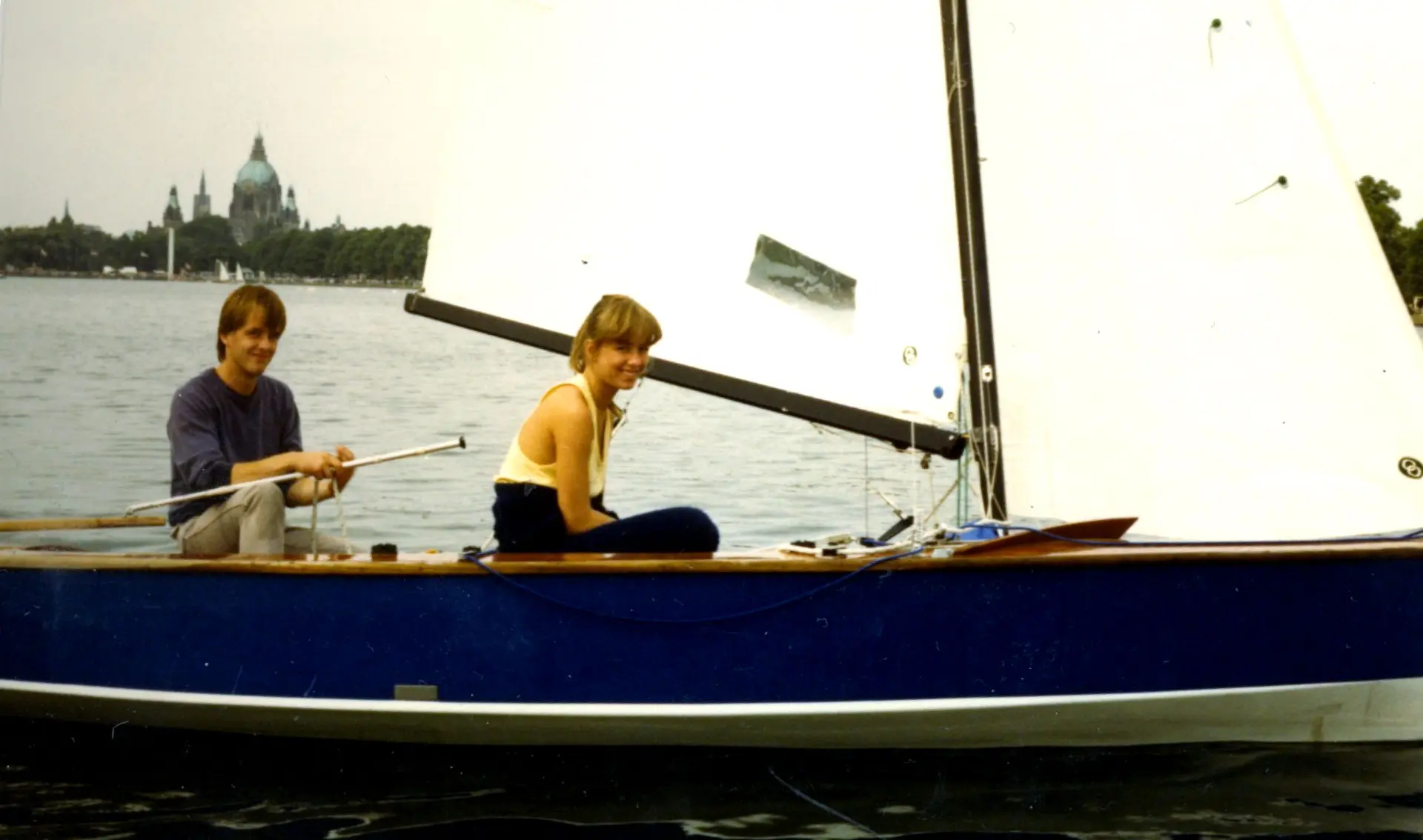
(P.S.: The young Scottish woman in the front of the cockpit is the helmsman's sister.)

Stephan Probst
More blog posts

Advertising that thinks ahead? How ChatGPT Ads are changing online marketing
We know advertising on Google. Advertising on Instagram, too. But advertising right in the middle of a conversation with an AI? That is now a reality.

Visual Knowledge: Image and Video as a New Language for SEO and GEO
Companies have far more knowledge than what is visible on their websites or in traditional marketing materials. Products, applications, expert…

SEO and GEO: one shared philosophy for greater visibility
Creating content for a website today means more than simply publishing information and waiting for someone to find it. Search engines and new AI tools…

Poetry Meets Performance: Why the Future of Content is a "Sandwich"
Brands today face a seemingly impossible task: they must touch the human soul while being perfectly understood by artificial intelligence (GEO) and…