Oh, dear digital Germany

About opportunities for young people that even the elderly cannot prevent.

An ode to digital remembrance day

How far have you come, dear digital Germany? What have you achieved, where do you stand today, after your promising start several decades ago in the early days of digital technology? Have you really been able to fulfill your potential? On the occasion of “German Digital Day,” a nationwide day of action focusing on digitization, digital participation, and all things digital, we ask ourselves these questions: Where do we stand, and what does the future hold for digitization in Germany?

You got off to a good start with digitization – beloved land of poets, thinkers, and engineers

When you started digitizing, dear Germany, at the beginning of the end of the last millennium, your conditions were quite favorable. Germany was quite far ahead, especially compared to its European neighbors. While France was still fiddling around with small-format Minitel devices, we in Germany were already working on applications for browsers and exploring the vastness of global telephone networks: open source and without borders. And we were, at least in our minds, just behind the Americans in terms of development, with a pioneering spirit and a sense of fun and joy in discovering new technical possibilities.

And didn't we have bright prospects? Large companies, a land of engineers, researchers, and scientific discoverers... Why shouldn't we continue to forge ahead with computer science and digital topics – further and further?

But then you lost your courage, you timid Germany. And your strength and drive faded away.

After the wild 90s came the lukewarm noughties. When the so-called “dotcom bubble” burst, along with its many completely exaggerated expectations, many skeptics in the country felt vindicated: hadn't they always warned “about this internet”? It “would never catch on”. Well, there you go! And from then on, things came to a standstill in Germany, now home to the fearful and the hesitant. A few examples:

  • Slow expansion of digital infrastructure: poor network coverage or no access at all were the norm – miserable conditions for any kind of development.
  • Lack of digital education in schools: Digital technology is not just a topic that teachers and timetable planners simply ignore. In addition, for many, many years, there has been a lack of equipment, connections, networks—in other words, all the necessary infrastructure. And even if it had been available, very few people in schools would have known how to use it, unfortunately due to fundamental rejection and mistrust, or at least unfamiliarity with digital media: “The internet—it's no good.”
  • Devaluation of STEM subjects as a whole, of courses and fields of study, and of professions in the fields of mathematics, computer science, natural sciences, and technology. The abolition of the internationally renowned title of “Diplom-Ingenieur” (graduate engineer) is just one example of this. The result: declining student numbers in engineering. For several years now, the number of first-year students in engineering has been falling significantly in Germany. Alarm bells must ring now, today. There is a shortage of well-trained people who could fill the approximately 170,000 vacant engineering positions and perform important tasks. The source is available here [in German

In the years from zero to well into the 2000s, a change in the intellectual climate took place in the country, triggered in part by the ongoing economic and financial crises. Fear of change and an uncertain future, and the desire for security and stability have shaped attitudes, mindsets, behavior, and decisions ever since. Overall, this does not form a good basis for digital progress. Instead, fear and ignorance about digital issues are at the forefront, especially among political decision-makers.

Digital: there's still room for improvement, Germany!

Network capacity: slow expansion

We are gradually catching up with the expansion of our network capacity. However, many cities and regions still look like patchwork quilts when you look at their network maps.

In schools: digitalization is progressing very slowly

The fact that digitalization should finally take place here is a political platitude in Sunday speeches. In reality, however, this has not really arrived in many schools due to inadequate equipment. It's a start, but much more needs to be done. Take France, for example, where teachers support their students entirely digitally: with assignments, results, work, communication, detailed performance profiles, and much more. Digitalization is not a topic that needs to be discussed here, but rather a normal part of everyday life, as it should be.

Lack of graduates: the norm in all digital professions

We have far too few developers, too few engineers, too few people who enjoy digital topics, progress, and development. And other countries have long since overtaken us. Here in Germany, developers and digital professionals from Asia and Africa are applying for jobs. Why? Because although we offer challenges, we have too few people with the necessary skills to tackle them. And we have neglected training for many years. Which is really nonsense, given the security that the future holds.

The negative connotation of “digital” seems to be the consensus in some circles

Instead of focusing on fascinating topics and applications, we have spent over twenty years promoting fear-mongering topics: “digital penetration” of everyday life, “transparent people,” “digital overload,” “digital data theft,” and much more. Certainly, some of these topics are truly challenging, concerns are justified, and dangers should not be underestimated. But instead of bans, they could be solved with incentives for good solutions and applications. This requires technical understanding, open-mindedness and, above all, in this case, digital media literacy.

Instead of being pioneers in international comparison, which we were and could have remained, we are now only the rearguard, looking after others. Mostly and predominantly.
Because it is possible! Just have the courage again, Germany!

Here are a few positive examples.

AI is a great opportunity

A new cause for concern? No, because it offers huge opportunities for fantastic applications in so many areas. With the potential to solve tasks quickly and effectively when used correctly, it frees up capacity for other tasks. Faster, further, better. What great things can we create with it today and tomorrow? That has to be the approach. Will we be successful with this topic in Germany? Yes, if we take a fundamentally different approach than we have in the past.

DRIVE in international development projects

We at DRIVE are good developers and take on key positions in international development teams, for example with colleagues from India, China, Canada, and Mexico. Because we have excellent technical skills, which we have developed and refined over many years. High standards of care and safety in testing and control are proven engineering and development skills that we value and maintain. Enjoying the development of complex applications enables us to work on exciting and challenging projects that we are able to solve brilliantly, and that's simply fun!

The spearhead of digitalization in engineering sciences comes from Hanover

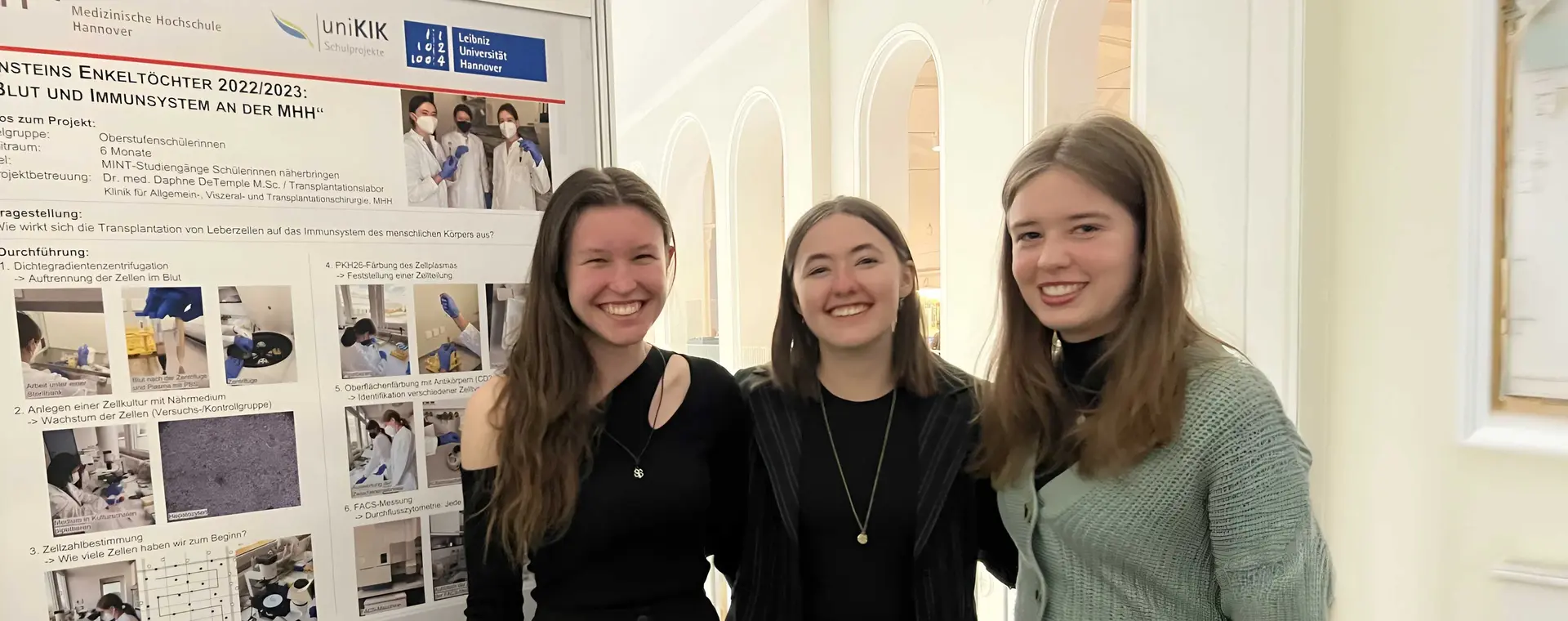
An example: The IKM, Institute for Continuum Mechanics at Leibniz University, is an international leader in the digitalization and simulation of application models for engineering sciences. Students from all over the world come here to study and develop their skills, with excellent prospects for jobs and careers worldwide. Hannover has built a new digital area for STEM subjects just outside the city, with a 5-minute connection to the international airport. The IKM is leading the way. Leibniz University is excellent. So, scientifically speaking, Hannover is actually top notch. However, and this is typical for Germany, it is not yet sufficiently aware of this itself.

The opportunity for Hanover, for Germany: to become once again a “city and location for bold ideas.”

For a long time, Hanover basked in the glory of its major trade fairs. But that has long since faded, because their time is over: they are too expensive, too big, and digital meetings are much easier. (If anything, a trade fair would have to be new, fascinating, exciting, and thrilling to attract people here. But that's another topic.) However, this city and, with it, Germany as a whole, have so much more to offer. We are international, we are and should be tolerant and cosmopolitan. Smart, inquisitive, curious, problem-solving, constantly evolving. Together with others. To find good answers to the big questions and challenges and develop forward-looking solutions. Digitalization is a very important part of this.

Germany finally needs DRIVE again

What is really needed is the right approach and the right motivation.

Fun, enjoyment, enthusiasm...

for digital technology, science, engineering, and everything that can be achieved with them.

Competence, curiosity, skill...

and the willingness to keep learning. To constantly improve yourself and push your boundaries.

A positive culture of ideas (which we cultivate at DRIVE)

Everything is possible and can be brought forward. There are no bad ideas at first. A desire to explore new territory with a thirst for knowledge.

Responsibility, reflection, overview

We are moving into new territory. Here, you have to be careful and pay attention at all times. Be cautious. Be open to others. Be transparent. Be honest and clear.

Be courageous.

No fear of the new. Those who dare, with caution, win with justice and confidence. Everything in a good balance – then digitalization will move forward: quickly, swiftly, sustainably. Here you can see how we do it at DRIVE.

Why is this important?

Because the topic offers young people endless opportunities. And with them, Germany as a whole. And for that, you simply need the right drive.

And what politics can, should, and must do

  • Expand digital infrastructure! Finally! Sustainably! Everywhere, without hesitation or delay. We need the best, fastest, and most powerful network. Here and everywhere.
  • Promote digital education! Digital must be a compulsory subject. The same applies to all creative and technical subjects, everything that advances the skills of students in Germany. And it goes without saying that the infrastructure must be in place in schools.
  • Proactively support science! Actively promote Germany as a center of science both nationally and globally.
  • Support businesses! Without them, without us, it won't work. We need young talent! Well educated. We need fewer obstacles and more freedom. Less government. And, of course, lower taxes, but we always need those.

What we don't need: commemorative days for digital technology. To remember a nice idea that is no longer really true? In a technophobic climate, that might be appreciated. But that's not what we want, is it? We want to move forward. Onward, ever onward.

About Digital Day itself – what it is and what it can do

Digital Day is an initiative that was launched in Germany to promote digitization in society and strengthen digital participation. Digital Day takes place once a year and offers a variety of events, workshops, lectures, and discussions on the topic of digitization.

The aim of Digital Day is to raise awareness among people of all ages and backgrounds about the opportunities and challenges of the digital world. Topics covered include data protection, IT security, digital education, artificial intelligence, e-government, smart cities, and much more.

Our author

... is a digital pioneer in Germany, has been designing and building digital communication and applications for what feels like 100 years, in Germany, Europe, and around the world; he practically invented the internet in Germany and, most importantly, created and published the first digital comic in Germany.

Here are a few other articles we have written on the subject:

GERMAN DIGITALIZATION – DIGITALIZATION IN GOOD OLD GERMANY – WHAT'S NOT WORKING?

GERMANY – “DIGITAL LAND”?

We hope you enjoy reading them.

More blog posts

You've won the European Heritage Seal! What a wonderful honor!

COMIC artists sharpen perspectives, seek new paths, and open up worlds. We are preparing a utopian-dystopian exhibition of visionary comic worlds at…

Digital battles are raging, including for children's minds. Social media companies have stepped up their game – but are children even prepared and…

Stephan Probst had the honor and opportunity to draw with the great comic artist Xu Jingru from Shenzhen at the International Comics Seminar.