There are 7.8 million people living with severe disabilities in Germany, and there are many more who are not included in these statistics, for example due to temporary disabilities. These include broken arms and legs, eye infections, or simply carrying a baby in your arms. However, it is not only physical, visible disabilities that are relevant, but also invisible limitations such as autism, ADHD, color blindness, or dyslexia.
Although implementing accessibility may seem daunting at first, the benefits of investing in it are undoubtedly worthwhile in many ways. The realization of accessibility as a fundamental human right remains incomplete in various parts of the world. Inclusion, especially in the field of digital technology, still offers much room for improvement. Expanding your potential audience is a direct result of offering easily accessible content. By removing barriers
, people who are normally excluded can now interact with your important content, offerings, and solutions instead of going to your competitors because they don't understand them.
In addition, search algorithms promote the availability of easily accessible content, which is then accurately captured and displayed by the algorithm. The benefits of accessible content go beyond people with disabilities: for example, watching videos without relying on sound – very useful on trams. Subtitles offer a way to understand the content without the need for audio.
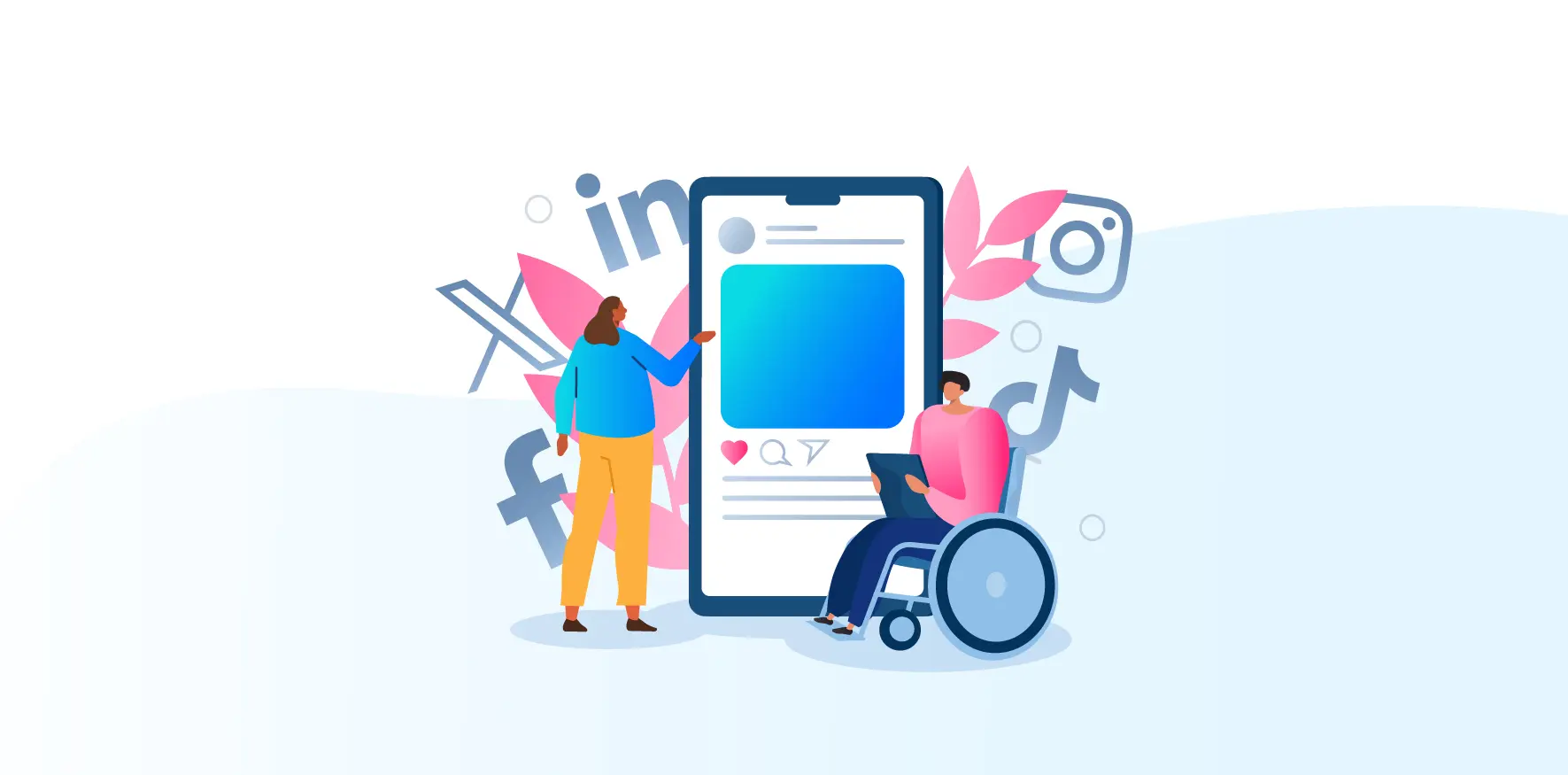
So it's about designing planned uploads to social media channels in such a way that they can be used in different ways. The challenge here is to know WHERE barriers arise and to use the channels accordingly. And that's not easy! Potentially, it's mostly images/videos, sounds, texts, and the entire community management, including emojis, GIFs, etc.