Barrierefreiheit BKK Landesverband Süd

How to make texts accessible: Easy language

So that your content can be easily understood by everyone.

For accessible websites, content should be prepared in “easy language.”

What is special about easy language?

This refers to content that is designed and prepared in such a way that it can be easily read and understood by people with intellectual disabilities or impairments.

  • Easy language is easy to understand.
  • Easy language can be written.
  • Easy language can be spoken.
  • Many people with learning difficulties find easy language helpful.
  • Easy language can also help other people.

How DRIVE designs easy language

Texts must be well prepared for “easy language.” DRIVE works with a specialized service provider for easy language to create and review texts. We prepare the texts and have them double-checked and revised if necessary.

What to keep in mind when using easy language

There are fixed rules for easy language. People with learning difficulties and people without learning difficulties have written down the rules together. Here are some of them:

  • Use simple words.
  • Write short sentences.
  • Do not use abbreviations.
  • Leave enough space between lines.
  • Use lots of paragraphs and headings.
  • Use pictures.

The most important thing: always have your text checked!

Reviewers Should Be Both Trained Experts and People with Disabilities. Only then can you be sure that your texts in Easy Language truly meet the intended goals. Work closely with your reviewers!

The official rules for Easy Language (Leichte Sprache) are available online at:
 https://www.leichte-sprache.org/das-ist-leichte-sprache (page in German)
If these rules are not followed, a text may not be labeled as “Easy Language.” Fundamentally, a text can only be referred to as "Easy Language" if it has been read and officially approved by a trained reviewer — that is, by a person with a cognitive disability who is qualified to review such content.

Outcome, Endorsement, and Certification for Easy Language

  • Service providers typically do not issue a custom certification logo. However, if you wish, you can add a clear note under the text such as:
    “Reviewed by [name] from [qualified service provider]”
  • In addition, you may use the Easy-to-Read logo from Inclusion Europe after a successful review process.
    A key requirement is that the review must be conducted by people with intellectual disabilities.
    You can find the official logo guidelines and usage terms here: https://easy-to-read.eu/europaisches-logo-easy-to-read 

What clients need to bear in mind

First and foremost, you need to decide whether you want to accept the reviewer's changes. Only then can you officially refer to the review by a specialized plain language service provider.

This means that we may have to simplify complex issues, which are often found in the source documents. Plain language can therefore also mean summarizing complex processes in very simple terms. This is not always easy, but it is our job.

Here is an example. It is clear to the reviewers concerned that “consider” does not mean “freely fantasize,” but is understood as a decision-making or planning process.

An example of easy language

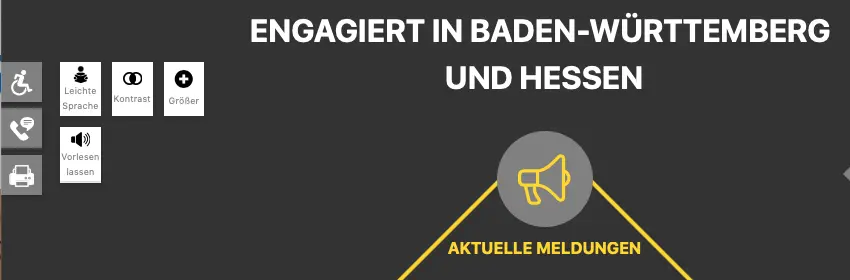
In this example, the text for easy language has been added as a separate page on the website. It can be easily found and accessed via the navigation bar. The text has been checked and approved as easy language. This means that the page offers good support to people for whom this text is intended. https://www.bkk-sued.de/leichte-sprache/ 

More blog posts

You've won the European Heritage Seal! What a wonderful honor!

COMIC artists sharpen perspectives, seek new paths, and open up worlds. We are preparing a utopian-dystopian exhibition of visionary comic worlds at…

Digital battles are raging, including for children's minds. Social media companies have stepped up their game – but are children even prepared and…

Stephan Probst had the honor and opportunity to draw with the great comic artist Xu Jingru from Shenzhen at the International Comics Seminar.