Communication remains important. It connects people and builds bridges, at least when that is the intention. That is our intention at DRIVE. It enables us to support effective processes and secure important structures. That is our job, and we are continuing to do it during these challenging times.
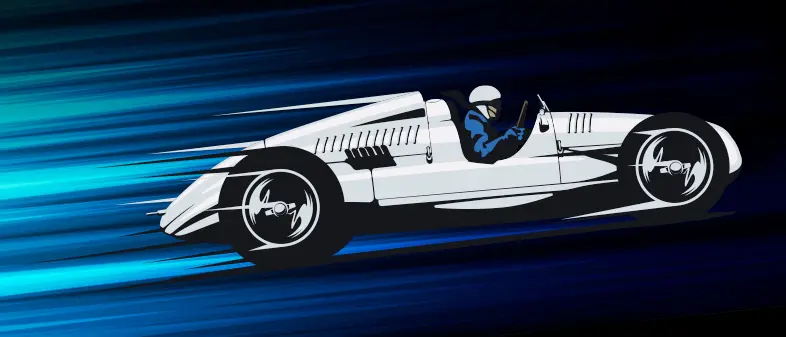
Why speed is so important
What distinguishes digital communication from traditional communication for brands
Brand communication has changed significantly. In the digital age, it is completely different from traditional communication: new conditions and frameworks lead to new rules. What are they? Here is a brief overview.
Total freedom > Gatekeeper media
| Total freedom of publication | “Gatekeepers” who control access |
When we invented the Internet, we celebrated total freedom. Finally, no more gatekeepers: gatekeepers who control, monitor, allow or deny access to every message, every post, every image, and ultimately censor them—that's how we saw it. Structuring and sorting, weighing, classifying, and evaluating is what “the others” called it. And that's how CLASSIC communication work was designed: overcoming hurdles, convincing gatekeepers, creating reach through money. Whoever drummed the loudest would be heard.
And with the internet: Hurray, we can publish whatever WE want! Finally free! (We are now falling back into old patterns, but that's another story).
Speed and constant rebranding
| Extremely high communication speed | Mostly medium to very long speed |
| Short life cycles >>> Rebranding | Long life cycles >>> Durability |
Everything is getting faster. If you don't react today, you won't be important tomorrow. And you probably won't be around anymore. Brands have to change much faster in the DIGITAL world than they ever realized in the CLASSIC world.
TRADITIONAL brand communication dictates: Always remain easily recognizable. Change as little as possible. Preferably not at all. So that people recognize you. The TRADITIONAL example: “Raider is now Twix. Nothing else has changed.”
DIGITAL brand communication, on the other hand, teaches the opposite: if you don't change, you're boring. Tomorrow you'll no longer be interesting. You have nothing more to say; people have already seen you.
A good example is MARVEL Comics, which constantly has to show that it is new, exciting, interesting, and worth buying. It does this not only digitally, but also at traditional newsstands. How? Through the small “corner box” in the top left corner, where they constantly change something every month and send exactly this signal. You can see immediately how it changes, but it's still recognizable! MARVEL is perfect for digital brand communication because they have mastered this rule for many years: “Change! Stay interesting and attractive. And win.”


Dialogue instead of mass communication
| Very close and personal >>> 1:1 feeling | Mass communication >>> 1:n-Doing |
| Breaking down the barrier between work and private life | Separation into B2B and B2C communication |
| “I am a brand!” applies to everything and everyone | “Brands” = special objects, people ... |
- Everything is important. “I am important.” Everyone can be a star, just like everyone else.
- Private life becomes professional and vice versa. There is no longer any separation.
- “If someone doesn't speak directly to me, I don't listen to them anymore. I don't even look at them.”
The individually perceived importance of the personal self is many times higher in this direct media communication than ever before. Whether this is appropriate is open to debate. But this is the impression, the image, and thus the rules of dialogue. EVERYTHING is a conversation. Because everyone talks, even if no one is actually listening. But at least you have to PRETEND to.
The real world is digital
| The world is communicated and experienced DIGITALLY | The world is conveyed and experienced in ANALOG form. |
| Simultaneous recording of messages | Sequential representation and perception |
| Experience is INDIRECT & media-based | Experience is IMMEDIATE & direct |
An experience is only perceived as “real” if it is supported and accompanied by the media. What's more, without this support, it doesn't “exist” at all, it doesn't “really” happen. Right now, we are still in a phase in which digital media, especially social media, are being learned and their rules are not yet fully mastered by everyone. This means that they are still very powerful and have a great impact, which will only wear off over time once they have been properly learned. But this is nothing new: when the first films were shown, one of a locomotive pulling into a train station, the audience ran out of the fairground tent in terror. Because they were afraid of being crushed. We are not much further along today: shortly after the big scare, still quite out of breath.
Good design is so important
| Good design is essential | Good design is essential |
| You must convince IMMEDIATELY: at first glance. | There are more second chances here |
| Many, many small channels and intermediaries | Few central media |
| Good entertainment is key ... | ... it's just that not everyone always noticed :) |
| Digital control and management | Analog control |
But the design itself is completely different. What is GOOD has to be redefined again and again. And that is quite challenging. Because now we no longer have just a few central media outlets with a few privileged gatekeepers. Instead, we have many, many, many channels, intermediaries, persuaders, disseminators, part-time and full-time influencers. We want to entertain with them and through them. And somehow, in any case, please, please, please, gain an overview. To do this, we need tools! Instruments that are no longer explained to us by some third-party specialists, but which we control ourselves and thus retain full control at all times—a nice wish, a pious intention. But the world is now digital and therefore completely chaotic for the time being.
The identity of corporations: From whale to swarm
| Swarm identity in corporations: sensing it ... | Corporate identity is shaped through guidelines |
| Dissolving boundaries through dialogue, closeness ... | Clearly separated: company, product, customer, price ... |
In the past, identity was like a whale: large and heavy, defined from its center. But today, it is a swarm of nimble fish, moving at lightning speed, here today, there tomorrow, less guided than united by similar intentions that may be completely different tomorrow. You swim with them and move forward together. You have to recognize, sense, and feel them quickly, preferably BEFORE they know exactly what they are doing and start moving. If you don't notice this, you lose touch, like a small fish left behind.
Digital communication is a tool for the masses: fast, easy, and flexible, especially in times of crisis.
It would be good if it could replace weapons. By spreading information faster and imparting more knowledge about contexts. So that it can be used and applied by everyone: quickly, easily, immediately, without gatekeepers. And thus enabling exchange between people who are separated by war. Giving them hope for peace, creating unity and agreement, imparting and generating identity.
What is needed to achieve this: a clear, understandable message. Strong imagery. At least one channel, preferably many. Be quick and direct. Not everything has to be perfect, but it has to be genuine. Remain credible, accessible through the media and therefore directly experienceable, real and close. React immediately to the environment and work proactively with it. Show “feeling” for the other side, address them directly, and exchange ideas with them. Just as the Ukrainian president is demonstrating so perfectly.
Will that be enough here and now? We will soon find out. It would be really good.


Stephan Probst
More blog posts
Advertising that thinks ahead? How ChatGPT Ads are changing online marketing
We know advertising on Google. Advertising on Instagram, too. But advertising right in the middle of a conversation with an AI? That is now a reality.
Visual Knowledge: Image and Video as a New Language for SEO and GEO
Companies have far more knowledge than what is visible on their websites or in traditional marketing materials. Products, applications, expert…

SEO and GEO: one shared philosophy for greater visibility
Creating content for a website today means more than simply publishing information and waiting for someone to find it. Search engines and new AI tools…

Poetry Meets Performance: Why the Future of Content is a "Sandwich"
Brands today face a seemingly impossible task: they must touch the human soul while being perfectly understood by artificial intelligence (GEO) and…