For closeness, friendship, and how to build your own community. Social media is playing an increasingly important role in communication. Pinterest, Instagram, LinkedIn, Facebook, Twitter—using all these channels requires a lot of attention, work, and resources. How can companies and institutions best deal with social media? Here are some thoughts and considerations.
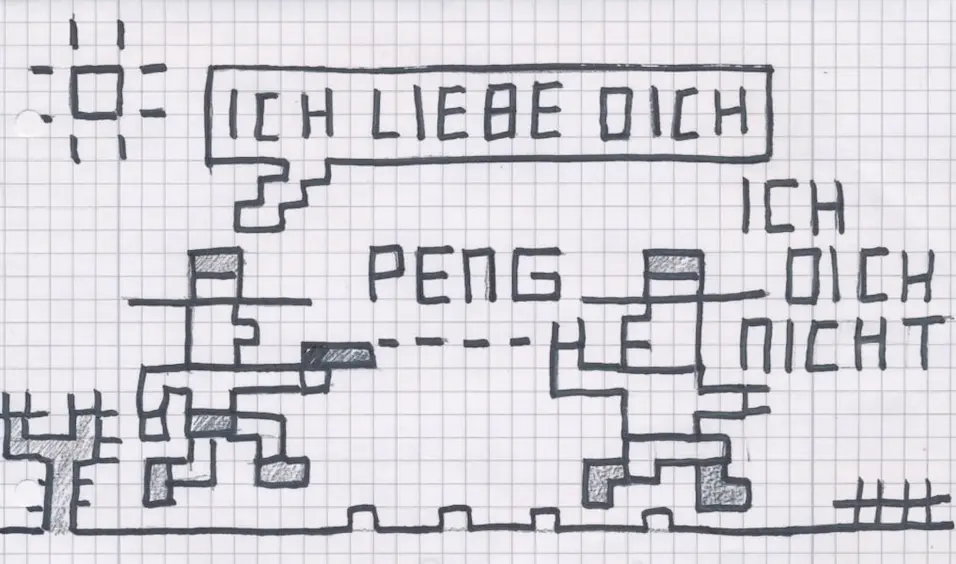
Social Media - I love you
Social media has its own rules when it comes to communication.
They are close and direct. They work immediately. The decision to look further or click away is made by our counterpart in a fraction of a second. You don't have two seconds. Either you convince them immediately or you are swiped away and forgotten.
Once you're in and close, you're in for good. Social media touches the heart and soul, and relationships can be built here over a long period of time. Once someone follows you, they stay loyal for a long time. This is how communities, followings, and friendships can actually be built. Why is that? The reason is: ...
Social media helps to make the world more manageable. Other media and the outside world overwhelm us: search engines deliver clickbait, algorithms are recognized as fraud, media consumption becomes stressful, but users are looking for enjoyment and benefit. Even if we learn to select better and filter faster, only content that you or “I” have marked as important will appear in ‘my’ social media.
THIS LEADS TO THE FOLLOWING EFFECTS:
- The “bubble” effect: You only hear and read what confirms your own views. Disruptive effects, which are used in traditional media to attract attention, are unpleasant and counterproductive. On the contrary: confirmation is important to recipients in order to counteract feeling overwhelmed. They live in their own bubble of perception, withdrawn into themselves, where nothing should disturb them.
- The “goldfish” effect: viewed from the outside, attention spans are decreasing. In a fraction of a second, the user is gone. Long explanations don't work, complex relationships are not understood. Either it works immediately or it's swiped away. People don't seem to recognize the limits of the glass they're swimming in because they've long since forgotten about it until they hit the next boundary. The fact is, users recognize in a flash whether something is relevant or not. If the right signs are shown, they move on, and if not, that's it. My bubble or my fishbowl? I don't care! Feeling good is more important than insights.
The “watchtower” effect: You isolate yourself from the outside world, the walls get higher. You retreat into your own group, your niche, your tribe, your sect, into your private sphere. What happens outside is less important, more threatening. Inside, it's nice and comfortable, where you want to stay and be completely yourself. And at the same time, you guard a great treasure: your own perceptions, values, beliefs, actions, rituals. Everything that strengthens the community is important. Anything that weakens it is rejected.
What does this mean for communication?
- Simple messages are important. Clarity comes before complexity.
- The first image must make an impact. You won't get a second chance.
- Positive images prevail. Kitten pictures beat everything. And a friendly smile helps too. (Or shock people, which only works for very few products, e.g., messages about the end of the world.)
- Those who reward, win. Praise, encouragement, and empowerment always work—as any good child educator will confirm.
Find out how we design social media content at DRIVE here.
REQUIREMENTS FOR COMMUNICATORS:
- Listen carefully to your dialogue partners! What do they want, what do they desire most? That's what you have to give them.
- Be a good role model for them. But not based on what you want, but on what they need. Give them guidance and be a beacon: shine.
- Reward them again and again. Give love, give joy. Make your friends happy.
- Talk to everyone individually. Be personal, direct, and approachable. Your company is open; it belongs to them as much as it belongs to you. You are a community. Show them that at all times. You serve their wishes, not yours.
AND WHAT IS THE REWARD FOR THOSE WHO COMMUNICATE?
You gain loyal followers. Think of yourselves as a soccer club, a community, a fan club, a circle of friends. Imagine the boundary between company and users disappearing.
BECAUSE: THE OLD MECHANISMS OF THE MEDIA BUSINESS NO LONGER WORK.
- The sender-receiver model has long since had its day. Users cannot be treated like Pavlov's dogs, drooling, clicking and buying in response to click stimuli. Even if the algorithm kings keep trying to drum into us how reliable their click cascades are. It was only a matter of time before the mechanisms of deception and fraud were seen through. Users are learning, just as they have with all other media innovations before. They want to be loved and convinced, not duped. They expect concrete offers and real rewards. Otherwise, they punish with disregard, which is the harshest punishment there is.
- Here the “company,” there the ‘clients’—this distinction is obsolete. Together, they make up what must be regarded as an “enterprise,” if not a “temporary project.” One cannot exist without the other; they all belong together and constantly take on new roles and tasks. Yes, this raises new problems in terms of security. But we solve them differently, not here.
- There are no more isolated campaigns. Many people think back fondly to the days when they were allowed to fight media battles from their hilltop command posts like generals. On the left, the television cavalry; on the right, the print cannons; and at the top, me, me, and me. Those days are over, and that's a good thing. We communicate constantly, every day, always in direct contact, and if we stop doing that, we're gone in no time.
WHERE DOES THIS WORK? AND HOW?
- B2C, business-to-consumer: It seems simplest and most obvious between companies and so-called end consumers. Depending on the industry, the images, languages, messages, roles, and games are different. But it's easiest for everyone to understand. And that's what everyone wants: what marketing director doesn't want a loyal following? It's paradise on earth, not just for the disciples, but also for the prophets.
- P2P, politics-to-public: The extreme parties were the first to understand this, as were revolutionaries in totalitarian societies. Social media offers opportunities to circumvent established and monitored channels. They have learned well how to build their own communities under the radar of the establishment, supply them with information, and immunize them against outside influences—and they are showing how it can be done. Those on the other side, however, are still struggling, especially in Germany: They speak the language only haltingly, find the form too simple, the users too naive, and dislike many other things... and remain preoccupied with themselves. They cannot afford to do so for much longer.
- B2B, business-to-business, social media is often still completely underestimated. There are real treasures to be found here. Because one thing has always worked well in B2B: you visit your friends, have a coffee and do business. Today, instead of a hot drink, there is a digital goodie, complemented by a personal touch. But you have to get off your high horse, out into the digital thicket, find your users and clients, and celebrate your friendship with them.
But how can companies and institutions best deal with social media? We want to explore this further in our next post.

Stephan Probst
More blog posts
Advertising that thinks ahead? How ChatGPT Ads are changing online marketing
We know advertising on Google. Advertising on Instagram, too. But advertising right in the middle of a conversation with an AI? That is now a reality.

Visual Knowledge: Image and Video as a New Language for SEO and GEO
Companies have far more knowledge than what is visible on their websites or in traditional marketing materials. Products, applications, expert…

SEO and GEO: one shared philosophy for greater visibility
Creating content for a website today means more than simply publishing information and waiting for someone to find it. Search engines and new AI tools…

Poetry Meets Performance: Why the Future of Content is a "Sandwich"
Brands today face a seemingly impossible task: they must touch the human soul while being perfectly understood by artificial intelligence (GEO) and…